The Detail
Materials, methods, and where the money goes.
Emergency plumbing is a distinct discipline — the goal is to protect the property first, restore function second, and plan the permanent fix third. Here's how each category is handled.
Live leaks and burst pipes
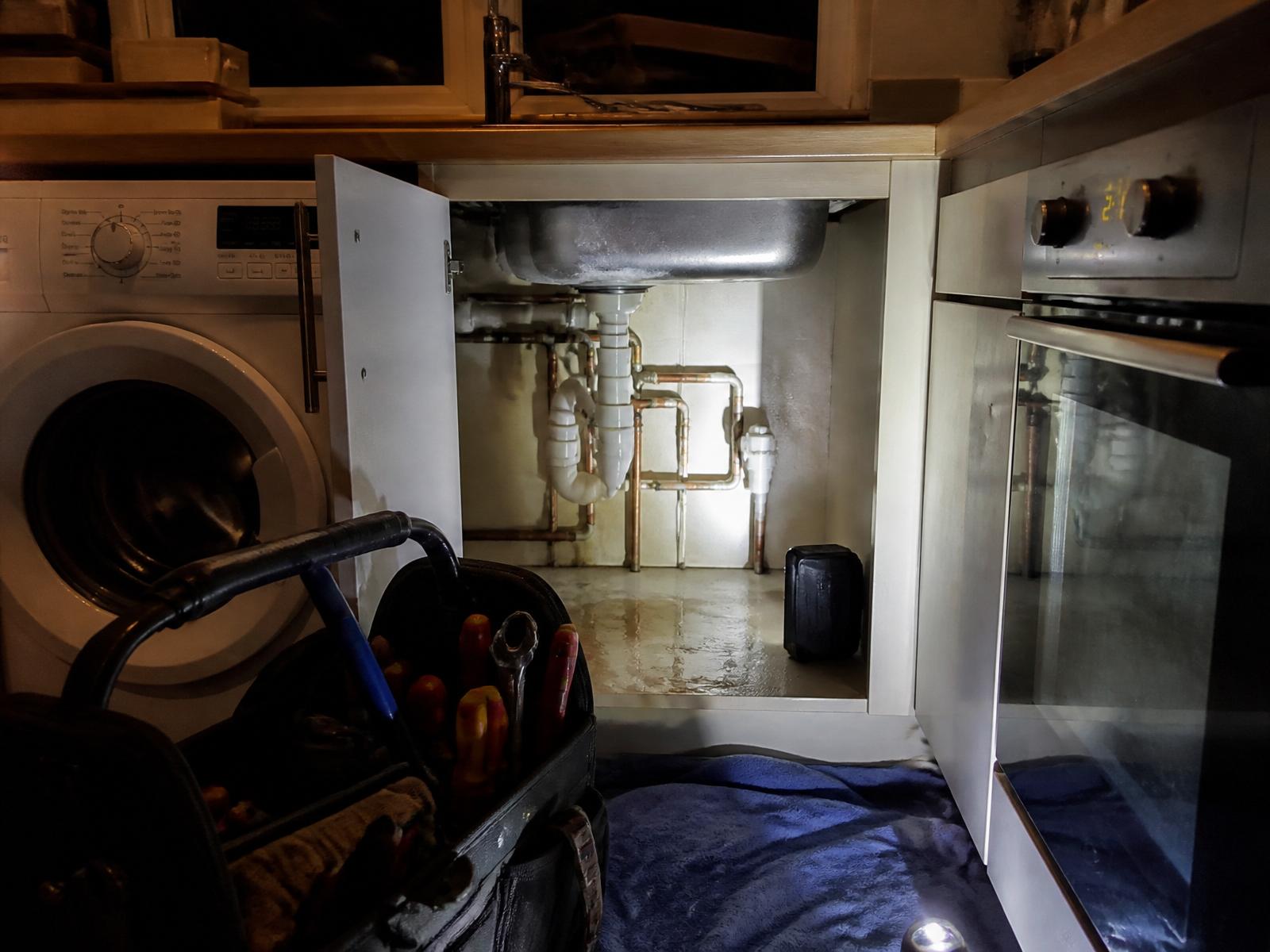
First move is always isolation — internal stopcock, external stop tap, or the affected section only if valves permit. Then contain, drain, and identify the failure point: pinhole, joint failure, split from freezing, or fitting failure. Copper repairs are typically soldered or press-fitted; concealed runs may be re-routed in MLCP to save chasing walls back open.
Suspected gas leaks
Gas emergencies are a Gas Safe matter, full stop. If you smell gas, call the National Gas Emergency line on 0800 111 999 first — then call us for the repair. On arrival we test, isolate at the meter if not already done, trace the leak, and either repair or cap safely with the appropriate labelling.
No heat / no hot water
Boiler lock-outs, pump failures, motorised valve stucks, low pressure, thermostat and diverter faults. We arrive with the common consumables (fuses, sensors, expansion vessel adaptors) and can get most Vaillant, Worcester and Ideal systems back to life on the first visit.
Blocked drains and overflowing wastes
For internal blockages we work with hand and electric augers on wastes and stack access points. Where the block is external (SVP, gully, or main line) we mobilise the drainage side — see the blocked drains page.
Cylinder failures and overflows
Dripping tundishes, expansion relief venting, immersion faults and thermostat failures on unvented cylinders — all G3 territory. We isolate, diagnose, and either replace the failed component or scope a full cylinder replacement.